Share Susan Wiener Myers's obituary with others.
Invite friends and family to read the obituary and add memories.
Stay updated
We'll notify you when service details or new memories are added.
You're now following this obituary
We'll email you when there are updates.
Select your format and elements to print
IN LOVING MEMORY OF Susan Wiener Myers
Susan Wiener
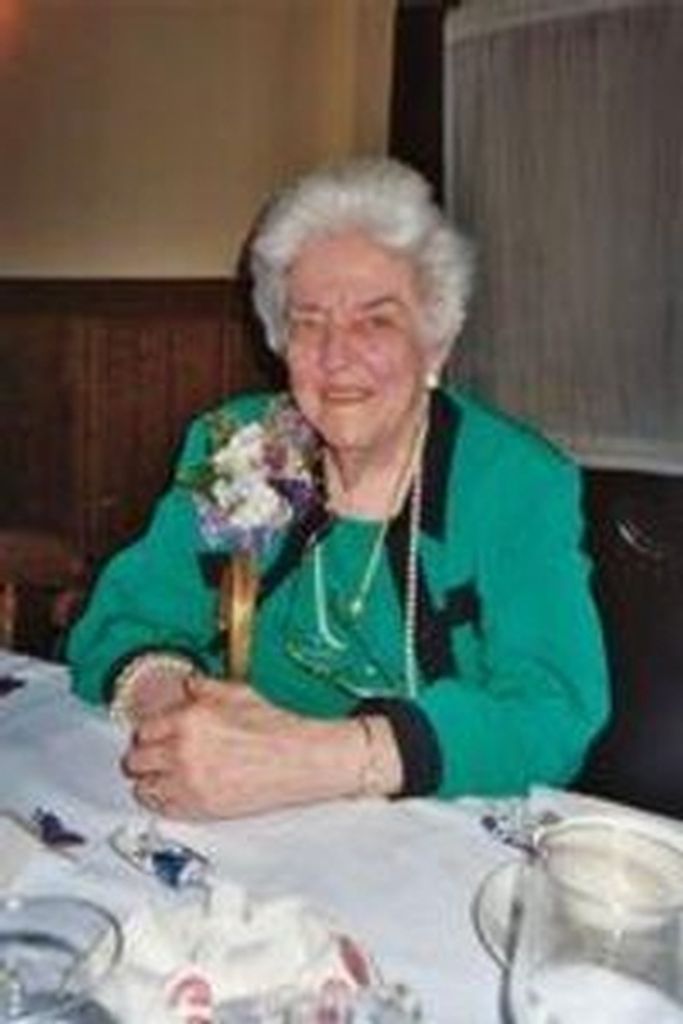
Myers
Sep 16, 1924 — Jan 24, 2009
Susan Wiener Myers' Obituary
She attended Wyoming Seminary (Class of 42), a private day school in Forty Fort, Pa. where she was the editor of the school paper, very popular and the founder of the Debating Society. The day after the Japanese attacked Pearl Harbor, Susan signed up as a nurses' aide. In the Fall of 42, she headed off to Wellesley (Class of 46) in Massachusetts but was quite disappointed at the suspension of social activities. She took great exception to this particularly with such close proximity to Boston. So Susan began to arrange various activities much to the dismay of Wellesley's administration, who decided that she preferred social events over academic pursuits. It was agreed that she would be happier transferring to Bennett and then on to Brown (Class of 48), where she met her husband, George Campbell Myers.
Susan was pre-deceased by her husband in September, 2007 and in addition to her parents, was pre-deceased also by her brothers, Howard Charles Wiener, Jr. and Edmund Burchard Wiener.
She is survived by her children Laurie Campbell Myers of Brussels, Belgium; sons George Campbell Myers, Jr., Jeffrey Cullen Myers (Chris Brandis), Gregory Burchard Myers and three grand children, Jeffrey Hunter, Christopher Chase and Campbell Austin Myers; her sister, Mrs. A. DeWitt Smith (Bobbie) of Dallas, Pa. and Naples, Florida as well as numerous cousins, nieces and nephews.
Susan had a variety of nicknames growing up such as Setty, Setty Boo, Soupy and Betty Sue. To her sister she will always be Betty Sue; to many of her friends she will always be Setty, to her late husband, Sweetie and to her grandchildren, Grandy.
The Early Years
Susan grew up in their 3-storey Tudor style home built by their father in 1929 on Butler Street in Kingston, Pa. From the time she was little, Susan battled various childhood illnesses as well as asthma, pneumonia and scarlet fever. Her sister and mother used to sit outside her room, the door draped with a white sheet and read her "Little Women" - she never knew that the character of Meg died of scarlet fever. The girls were fascinated with the nurses and their starched white caps with black velvet ribbons. The two brothers thrilled at the freedom they enjoyed while everyone was absorbed with little Betty Sue. At the age of twelve, she was taken to Jefferson Hospital and underwent the first ever bronchoscope procedure, from which a serum was created that ended her respiratory difficulties and helped thousands of others to overcome similar problems. She would quote that experience back to doctors and hospital staffs the rest of her life.
As a result of her illnesses, Susan spent a great deal of time in her formative years reading, she became an avid reader, went through everything in the family library and even had to ask her father if she could read his adventure magazines. This may have led to her love of travel years later. She developed an enormous vocabulary, the ability to retain information and trained her mind to think critically. She used these learnings against her sister at every chance. To combat the onslaught of unknown words, Bobbie would chase Susan around the room and get her down in a scissor lock just to stop the tirade.
English, not being enough, she started learning other languages at an early age, first French then Latin, Spanish, German and Portuguese. Once at Brown she became a language major. After graduation she moved to New York where she worked for 6 years with Nelson Rockefeller and acted as a linguist and travel coordinator for the family. Mrs. Rockefeller was heard to say that, "The office was never as organized as it was under Susan." Some of the family idiosyncrasies were even initiated under her watch: Nelson always had to sit in the last seat on the plane. In case of a crash, it was considered to be the safest place. All flights were monitored from time of booking through to landing to ensure appropriate transport was on site and no time was wasted. The best shows, restaurants and hotels were constantly on her lips to ensure that dignitaries, family and friends always had the best of the best in experience and service. Her hard work was much appreciated, upon her departure in 1953; Nelson gave her a beautiful diamond watch and bracelet.
Marrying George
During her time in New York, Susan was pursued by a courter by the name of George Myers whom she met at a Wellesley mixer. George was known to have visited Susan at the office on more than one occasion. Once he actually met a man in the elevator and asked where he could find Susan, much to Susan's dismay, she looked up to see Nelson escorting 6'5" George to her desk. On another occasion, George called in a nonchalant manner and said he had just stopped by on his way back to Brown. Of course Susan knew full well that center city New York was not exactly on the way between Chestnut Hill and Providence and pointed out to him that he was well off the appropriate routing. But he came up anyway and took her to the Rainbow Room where he asked her to marry him.
Life for the couple began in September, 1953 when they were wed at St. Stephen's Church in Wilkes Barre, Pa. Their honeymoon was spent going transatlantic aboard the Queen Elisabeth and visiting all the great European cities from Paris to Rome, Barcelona, Madrid, Milan and Monte Carlo. They returned to the States that Fall to their first home in Wynnwood, Pa. A year later their daughter, Laurie was born in the middle of a snow storm. Cam (George Campbell, Jr.) came the following year and Jeff a year later. Greg arrived a few years later as quite a surprise in 1962. From Wynnwood, they moved to Gladwyne, Devon, Chattanooga (TN), Atlanta (GA) and back to the Mainline, Berwyn, where they spent 31 years.
The Junior League and An Early Vision Always a member of the Junior League, Susan had started the Outgrown Shop in the Philadelphia League, which operated for years out of the x on y near Independence Hall. Both the Chattanooga and Atlanta Leagues benefitted from her talents. She organized literacy projects and fund raisers for the development of the Arts. It was upon her return to the Philadelphia area that she was struck by the picture she described as "weeping eyes" (rust stains coming from both sides of each window) on a cluster of run down Greek buildings just below the Philadelphia Art Museum, near Boat House Row. What are those buildings? George told her they were the old and abandoned Fairmount Waterworks. The Fairmount Waterworks - "one of the finest examples of neo classical architecture in the world," Louis Kahn, AIA Following a series of yellow fever epidemics in the late 1700s (which was at the time thought to be caused by unclean water) city leaders appointed a "Watering Committee". The initial water system was designed by Benjamin Franklin and accepted by the committee in 1799. His system utilized two steam engines to pump water from the Schuylkill River into the city, then into two water tanks. Plagued with operational problems, the committee began searching for another solution and eventually picked John David and Frederick Graff to design the new waterworks which were constructed between 1819 and 1822. The waterworks initially consisted of a 3 million gallon (11,350,000 L) reservoir and a pump house using steam engines to pump water. In 1822, a 1,600-foot (487 m) dam was built across the Schuylkill to direct water to three water wheels which replaced the steam engine. The facility, the industrial nature of which was disguised by a Greek Revival exterior, became a well-known attraction for its beauty and location on the riverside, second only to Niagara Falls as a US tourist attraction. Visitors included Charles Dickens, who praised it for its pleasant design and public usefulness. The waterworks eventually closed in 1909, after years of service, when several newer and more technologically updated facilities were built. After the waterworks closed in 1909 the facility was used for several purposes, including the Philadelphia Aquarium (which closed in 1962) and an indoor swimming pool which closed in 1973. The Project Begins - Tiny Strokes, Fell Mighty Oaks' Left abandoned by the city, the waterworks were spotted by Susan, a member of the Junior League of Philadelphia who drove frequently down to the city for League meetings. Day after day she viewed what she would refer to the "weeping eyes", caused by iron leaching from the corners of the windows. These beautiful Greek Revival buildings seemed to be crying out for help and their cause was to become Susan's for the rest of her life.
The Water Works and the Graff Mansion were first selected as a project of the Philadelphia League under Susan's guidance. This was to become a joint active/sustainer project, and remained so for many years. Susan worked on funding, campaigned for public support, slowly ousted the Aquarium Devils (local gang members) and physically worked on the site for over 30 years.
During the 1970's, Victorian Sundays were held to raise awareness and funding, fostering a use of the site that was much like the days back in Victorian times. There was a restaurant on site, and Susan's Restoration Committee monitored the progress of an architectural feasibility study, always with an eye to what this site could eventually become. Susan was able to enlist the collaboration of the Fairmount Park Commission and the Philadelphia Water Department in 1974 and thanks to the perseverance of the Committee and the League, in 1976, it was added to the National Register of Historic Places.
By 1982, the Water Committee Building was restored, thanks in part to a $42,000 matching grant from the Junior League. By this time, over $66,000 had been contributed. Throughout the 1980's and beyond, Susan and the League held the "Galaxy of Trees" celebration every November to earn funds for the Water Works. Trees and holiday decorations were created, donated and auctioned to the public, a celebration which was held for over 20 years under Susan's leadership.
Her fundraising efforts sought and received $1,800,000 in grants for the restoration of the Old Mill house, and by 1987, another $75,000 was given to the Mayor for work at the Water Works in honor of the 75th anniversary of the Junior League. Throughout this entire time she continued to carry the famous Water- works placemat. In April, 1987 Susan was recognized by the City of Philadelphia, Mayor Wilson Goode for outstanding volunteer efforts in a ceremony held at the Convention Center.
In the Fall of 1990 the Fairmount Waterworks Restoration Committee and the Preservation Coalition of Greater Philadelphia joined the endeavor. Big dollars ($23 million) were raised over the next decade through the efforts of Susan, her Co-Chair, Ginnie Maloney, the Committee, the League and Ernesta Ballard with the Fairmount Park Conservancy. A severe fire of the engine house caused setbacks to the restoration, but the project got back on track through her continued perseverance.
In 1999, Susan and George moved from their home in Berwyn to a retirement community in West Brandywine, Pa. Susan's efforts for the Waterworks continued, she joined the Residents' Committee and arranged for daytrips down to the Waterworks so residents of the community would learn of the site and its significance. She also joined the Resident's Committee at the Inn to ensure that resident's voice was always provided to the facility's management.
In 2001, The Water Works Restoration Committee, still chaired by Susan Myers, moved from the auspices of the Junior League to the Preservation Alliance of Greater Philadelphia. Susan Myers' committee designated some of the remaining monies toward the restoration of the eagle atop the pavilion at water's edge ($10,000) and $35,000 toward the renovation of the Frederick Graff monument in the South Garden. The last of the monies was used recently to restore the cupola atop the Water Works restaurant building.
In December 2004, Michael Karloutsos won a 25 year, $120,000/year lease with the Fairmount Park Commission. After a highly publicized renovation, Karloutsos opened the Water Works Restaurant and Lounge on July 20, 2006. The Women for the Waterworks Fairmount Park Conservancy was formed in Jan. 2006 and was comprised of 115 civic minded women who pledged to continue her efforts. Their efforts now were committed to raising the necessary funds to finish the south gardens and Cliffside paths bringing the final phase of the Waterworks project which included the restoration of the north and south Cliffside paths, the Mercury pavilion and the Rustic pavilion. May 2008 saw the Committee honored by the Preservation Alliance for Greater Philadelphia which awarded the Women for the Waterworks the 2008 Community Action Award for commitment to the preservation of the Fairmount Waterworks. At the Third Annual Water Works Celebration on September 14, 2008, over 600 people enjoyed a warm and wonderful evening of drinks, dining, music, and beautiful views amidst the restored Waterworks buildings and South Garden. Guests were able to visit the Water-works Interpretive Center as well as climb the Central Cliff Path to view the Rustic and Mercury Pavilions and raised boardwalk. Susan was so pleased to be an honored guest and participate in the culmination of her dream, glowing with pride that this beautiful and historic place was no longer just a dream. This year's celebration commemorated the conclusion of the Women for the Water Works $5 million campaign to restore and endow the South Garden and Cliffside Paths. Susan's great determination saved these buildings from collapsing into the Schuylkill River at a time when many other voices thought it was a lost cause. She has been honored former Mayor Goode and by many civic groups for her efforts to save and restore the Water Works. Finally, after more than 30 years, the buildings and landscape are returned to their original 19th century splendor, creating a unique civic space for the enjoyment of everyone. It has been described as the epicenter of the quintessential Philadelphia experience" by the head of the Fairmount Parks Commission.
Susan will always be remembered for her love of historic treasures, wonderful sense of humor, intelligence and unwavering determination to get the job done. She was able to get to the root of a problem, build consensus and clearly communicate her visions. Everyone who came into contact with her has stories to tell, lessons learned and fond memories. She truly was, one of kind' and will be long missed. In her spirit, the family has set up a fund with the Junior League of Philadelphia to continue the preservation of the Water Works and to provide seed money for new projects of a similar lost cause ilk, The League will receive proposals for consideration.
Contributions may be sent to: Susan Myers Restoration Fund C/O The Junior League of Philadelphia, Inc. 27 W. Lancaster Avenue Ardmore PA 19003.
Susan Wiener Myers' Guestbook
Visits: 5
This site is protected by reCAPTCHA and the
Google Privacy Policy and Terms of Service apply.
Service map data © OpenStreetMap contributors